


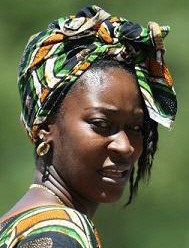

Suriname is the smallest independent country in South America, located on the northern east coast of South America. The country's mixed ethnic heritage, consisting of Afro-Surinamese, indigenous peoples, Hindustani, Javanese, and Chinese communities, contributes to its cultural diversity while also reflecting its history of plantation slavery.
Surinamese Creole people are of mixed African and European heritage, differentiating themselves from their African counterparts – the Maroons. Collectively, they are referred to as Afro-Surinamese whose African ancestors were enslaved and brought to Suriname during the Dutch colonial period. Other than speaking the official language, Dutch, the Creole's lingua franca is Sranan Tongo - an English-based creole language that has Dutch, Portuguese, and African influences.
Surinamese Creole's political awakening after World War II led to formation of political parties along ethnic lines. Suriname eventually gained independence from the Netherlands on 25 November 1975. During the period of young nationhood, Suriname experienced economic depression. In 1980, militaristic attempts to change the democratic state to a socialist republic resulted in the cruel and violent elimination of political oppositions.
Most of Suriname's population lives in the north along the coast and in the urban center of the capital, Paramaribo. Many Creoles work in government positions, education, healthcare, and various professional sectors, reflecting their generally higher levels of formal education compared to other ethnic groups in Suriname. The Creole community has historically dominated the civil service and military, though economic opportunities have become more diverse in recent decades.
Suriname's system of education is modeled on that of the Netherlands, and Dutch is the language of instruction. Children between the ages of six and twelve must attend school in Suriname. The country's most popular sports are soccer, basketball, and volleyball. Fishing, hunting, and birdkeeping are also some of the common hobbies.
Music and dance are integral to Creole cultural life, with genres like kaseko and kawina reflecting their expressions of identity and community solidarity. Social gatherings, celebrations, and religious ceremonies bring families and communities together regularly, maintaining social bonds that have been essential to Creole identity. Family structures among Creoles often feature strong extended family networks, with grandmothers frequently playing central roles in childcare and family decision-making.
The Surinamese Creole community mostly believe in Christianity, subscribing to different denominations such as the Moravian Church, the Roman Catholic Church, and various Protestant denominations due to the influence of European colonizers.
However, there are many Creoles who see no contradiction in simultaneously attending Christian churches and participating in Winti rituals. Winti is a syncretic blend of various West African religious traditions that were fused together by enslaved people from different ethnic groups. It was a tabooed religion that was legally banned for nearly a century in Suriname from 1874 to 1971 due to its association with the occult and lower social status. Based on three principles: the belief in a supreme creator, the belief in spirits, and the practice of honoring ancestors.
Evangelical and Pentecostal Christianity has grown among Creoles in recent decades, with some converts explicitly rejecting Winti practices as incompatible with their new faith.
The nation's first female president, Jennifer Geerlings-Simons, was elected in July 2025. The country's governmental leadership needs to create social harmony and integration within and amongst the various ethnic groups. Sound socio-economic and political policies for the Suriname Creole and the political will to enact them would gain the trust of the citizens in Suriname. Additionally, acknowledgement of the crucial contributions of Afro-Surinamese would also highly improve their cohesiveness and collective dedication to make Suriname a thriving place to live in.
Ensuring adequate transport infrastructure, health care facilities and sanitation services across the country will provide Afro-Surinamese with much opportunities to better their quality of life and standard of living.
Widening social and economic inequalities, corruption, money laundering and weak border controls are factors that lead to the rise of criminal-related enterprises (casinos, gold panning, smuggling and drug trafficking). Young people need positive role models and programs that provide alternatives to the allure of criminal activity and drug culture that have impacted some Creole neighborhoods.
Access to quality education beyond the secondary level remains a challenge for many Creole families, with costs and limited university capacity creating barriers to advancement in an increasingly competitive job market. Economic diversification will increase employment opportunities. Currently, Suriname's economy is largely based on natural resources, particularly bauxite, gold, and oil. Aside from these, main sources of income are from agriculture and remittances, mostly from the Netherlands, French Guiana, and the United States.
Leadership development within the church is essential, as many Christian communities lack well-trained pastors and teachers who can provide solid biblical instruction and pastoral care. The community would benefit from culturally sensitive Christian discipleship resources that address the syncretistic religious practices many maintain alongside their Christian profession, helping them understand biblical truth more deeply.
Pray that Surinamese Creole Christians will encounter the power and sufficiency of Christ in ways that lead them to fully abandon syncretistic Winti practices and embrace biblical faith alone.
Pray for the Afro-Surinamese to be set free from the generational curse of enslavement.
Pray for disciples of God to sow seeds of the gospel in good soil amongst ethnic groups that have not yet heard the Good News of Jesus. May they yield an abundant harvest.
Pray for the country to experience political stability and economic growth through wise and righteous leadership.
Pray that soon Surinamese Creole Christians will become part of God's ambassadors to Hindus and Muslims.
Scripture Prayers for the Surinamese Creole, Sranan in Suriname.
https://www.britannica.com/place/Suriname
https://www.ebsco.com/research-starters/geography-and-cartography/suriname
https://en.wikipedia.org/wiki/Winti#:~:text=Winti%20is%20an%20Afro%2DSurinamese,sources%2C%20nor%20a%20central%20authority
| Profile Source: Joshua Project |



