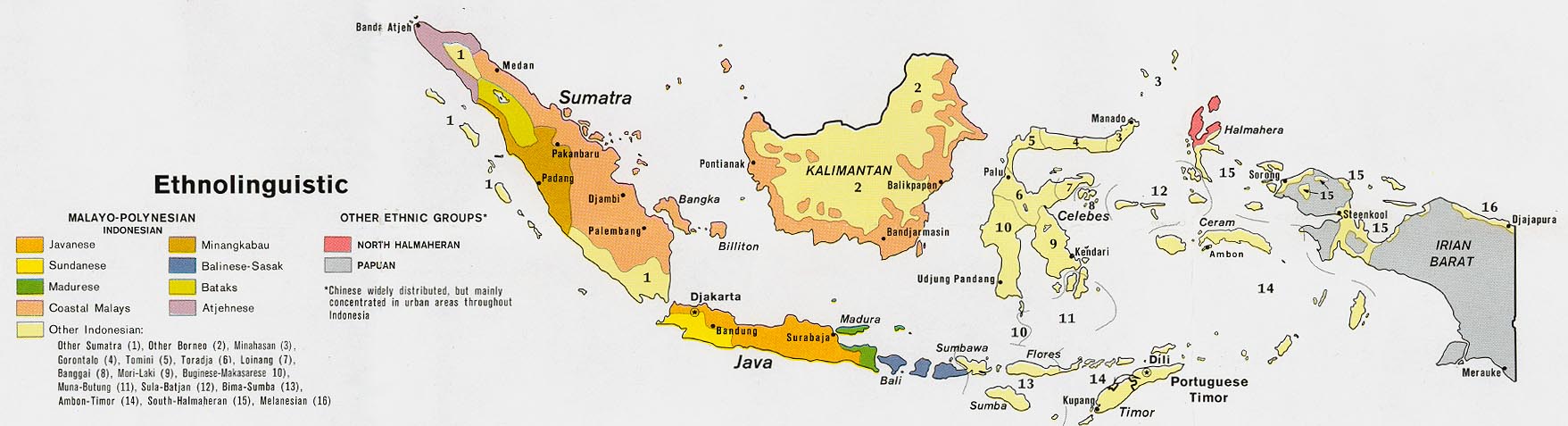
The Tagulandang Sangir people live on Tagulandang Island, part of the Sangihe-Talaud archipelago in North Sulawesi Province, Indonesia, near the border with the Philippines. They speak the Sangir language, an Austronesian language with several dialects, and also use Indonesian for education and trade.
Historically, the Sangir trace their roots to Austronesian settlers who migrated through the Philippines and Sulawesi thousands of years ago. Their strategic location on maritime trade routes connected them to Maluku and the Philippines, influencing their culture and economy. During the colonial era, European contact introduced Christianity and new governance structures, though Islam also spread through trade networks. Today, the Tagulandang Sangir maintain a strong cultural identity rooted in their island heritage, fishing traditions, and oral history.
The Tagulandang Sangir live in coastal villages where life revolves around the sea. Fishing is the primary occupation, supplemented by coconut and nutmeg cultivation and small-scale farming of rice and root crops. Men typically fish and farm, while women manage household tasks and weaving. Houses are often built from wood with tin or thatched roofs, clustered near the shoreline.
Family life is close-knit, with extended families sharing responsibilities. Social gatherings and celebrations often include traditional dances such as Gunde and Salo, accompanied by music and feasting. Meals feature rice as the staple, served with fish, vegetables, and spicy condiments. While modernization has introduced schools, mobile phones, and motorboats, many Tagulandang Sangir communities remain economically dependent on fishing and agriculture.
The Tagulandang Sangir people primarily identify with Christianity, especially Protestant denominations, introduced by missionaries in the 16th century. Churches are central to community life, and worship services include singing, prayer, and Bible reading. However, spiritual depth varies, and some traditional animistic practices—such as respect for nature spirits—may persist in subtle ways. Yet, they are highly Christianized, and God can use them to extend his kingdom to those who don't know the only Savior.
The Tagulandang Sangir face challenges related to economic vulnerability and spiritual growth. Fishing and farming provide limited income, and environmental changes threaten their livelihoods. Access to healthcare and higher education is limited, especially in remote villages. Spiritually, there is a need for strong local leadership and ongoing discipleship to help believers grow in faith and live out biblical principles. Preserving their language and cultural identity while integrating biblical truth is also important.
Pray that the gospel will continue to transform Tagulandang Sangir families and communities, bringing hope and peace through Jesus Christ.
Ask God to raise up mature local leaders who can teach Scripture faithfully and disciple others.
Intercede for those who already identify as Christians, that they will become part of the global mission force and share Christ with neighboring groups.
Pray for improved access to healthcare, clean water, and education, and for wisdom to sustain their livelihoods and protect their environment.
Scripture Prayers for the Sangir, Tagulandang in Indonesia.
PeopleGroups.org – Tagulandang
Wikipedia – Sangir People
History and Traditions of the Sangir Tribe
| Profile Source: Joshua Project |