


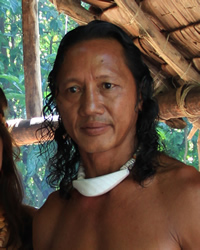

Scattered across a chain of low-lying coral atolls in the western Caroline Islands, the Woleaian people inhabit one of the more remote corners of the Pacific Ocean. Their homeland includes the atolls of Woleai, Ifaluk, Eauripik, Faraulep, Elato, and Lamotrek — all part of Yap State within the Federated States of Micronesia (FSM). The Woleaian language belongs to the Micronesian branch of the Austronesian family, and while dialects differ from atoll to atoll, they remain mutually intelligible. Many Woleaian men also speak English, though it is far less common among women.
The ancestors of the Woleaian people arrived in the Caroline Islands around the early centuries of the Common Era, part of the great Austronesian seafaring migration across the Pacific. For centuries, Woleai fell within the sphere of the powerful Yapese Empire, paying tribute to Yap in an elaborate exchange network. European contact began in earnest under Spanish colonial control in the late seventeenth century, followed by German administration at the turn of the twentieth century. Japan seized the islands during World War I and held them until the close of World War II, when the United States administered the region under a United Nations trust territory. In 1986, Woleai became part of the newly independent Federated States of Micronesia. The Woleaian people have navigated wave after wave of outside influence while managing to preserve a remarkable degree of their traditional way of life, in large part due to their geographic isolation and the deliberate efforts of their chiefs to protect local customs.
Life on the Woleaian atolls is shaped above all by the sea and the land — both of which are treated as shared, sacred resources. The economy is primarily subsistence-based. Men fish from outrigger canoes and are responsible for climbing trees, building and repairing houses, and crafting canoes and fishing equipment. Women tend the taro patches — spaces considered off-limits to men — and harvest the root crops that form a cornerstone of the Woleaian diet. Typical meals include taro, breadfruit, coconut, and fresh fish. When fruits are in season, children enjoy them freely, and white rice occasionally supplements the diet for those who can obtain it. Feasts held roughly twice a month may include chicken, pork, or other special foods. Because there is no refrigeration on the atolls, food must be consumed quickly or preserved through smoking and curing.
Woleaian society is organized matrilineally, meaning descent, inheritance, and land rights all pass through the mother's line. Land is never bought or sold — it is held collectively by clans and managed by the senior women of each lineage. A household typically includes several generations living together, and childcare is a communal responsibility shared by everyone in the compound. Marriages are monogamous and arranged or approved by a person's maternal uncle. Adoption is widely practiced and viewed as a natural expression of community solidarity.
Social life is highly structured. Men and women generally spend their days in separate spaces due to differing work roles. Chiefs and elders exercise authority over labor, resource distribution, ritual life, and the resolution of conflicts. Status is also gained through mastery of traditional skills — particularly navigation, which is treated as both a practical craft and a form of specialized knowledge. Gifted navigators, called pelu, hold honored positions in Woleaian society and undergo formal rites of passage upon completing their training. Song, dance, and weaving are also cherished arts, with women composing and singing music that accompanies elaborate ceremonial dances.
The Woleaian people are counted as Roman Catholic, and Catholic feast days such as Christmas are observed with church services and communal celebrations. Priests from neighboring Ulithi visit the atolls several times a year to minister to the community, and the rhythm of the Catholic calendar shapes much of the public religious life of the islands.
However, Catholic practice on the atolls blends with a longstanding animistic and ancestor-centered spiritual worldview that many Woleaians continue to trust and rely upon. Woleaians use the term Yalus to refer to gods, spirits, and ghosts — beings they believe inhabit the sky, sea, and land. Some of these spiritual forces are seen as benevolent patrons of crafts and voyages; others are regarded as sources of illness and misfortune. Matrilineal households maintain altars where offerings are made to ancestral spirits, and chiefs may call for specific rituals before major events such as ocean voyages or the onset of typhoon season.
Girls undergo puberty ceremonies marking their passage into womanhood, and the dead are mourned through prescribed rituals lasting from several days to several months, reflecting a deep belief in the ongoing presence of ancestral spirits among the living.
Traditional religious specialists — diviners, healers, and those with knowledge of weather or fishing magic — have historically played a significant role in Woleaian spiritual life. While this specialized knowledge is becoming rarer as its practitioners age, the underlying spiritual framework that gives it meaning remains woven into the fabric of daily life.
Proselytizing by outside missionaries is not permitted on the islands, meaning that formal evangelical outreach faces significant structural barriers.
The Woleaian people face the practical challenges common to small, isolated island communities. Geographic remoteness limits access to medical care, higher education, and economic opportunity. The degraded state of Woleai's airfield has further cut the atolls off from reliable air access, deepening their isolation. The threat of typhoons is a recurring reality, and the low elevation of these coral atolls makes them increasingly vulnerable to the effects of rising sea levels and climate change. Young men who leave the islands in search of work enter a very different world with little preparation, and the social ties that sustain life on the atolls are strained by out-migration.
Spiritually, the Woleaian people need a clear and personal encounter with Jesus Christ. While Catholic structures are present, a deep blending of animistic belief with Christian practice means that many Woleaians are trusting in a complex web of spiritual forces and ancestral obligations rather than in the saving grace of Christ alone. They need believers who will faithfully and lovingly proclaim the gospel in the Woleaian language and context, and they need the Scriptures made available and accessible to them in a form they can read and understand.
Pray that the Lord would raise up gospel-centered workers — both outsiders and Woleaians themselves — who are equipped and permitted to proclaim the good news on these remote atolls.
Pray for Bible translation and literacy resources to be developed in the Woleaian language so that God's word can take root in people's hearts.
Ask God to provide reliable access to medical care, infrastructure improvements, and sustainable livelihoods for these isolated island communities.
Pray that any Woleaian believers who have encountered the true gospel would grow in faith and boldly share it within their own families, clans, and communities.
Scripture Prayers for the Woleaian in Micronesia, Federated States.
| Profile Source: Joshua Project |


