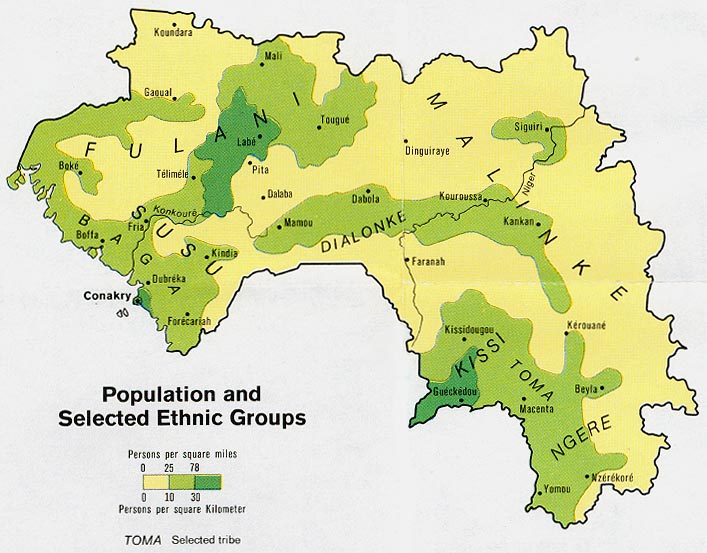
The Baga Binari are one of the Baga subgroups living along the coastal regions of Guinea in West Africa, particularly in the Boké area near the Nunez River. They are part of the wider Baga ethnic family, a collection of closely related peoples historically known as coastal rice farmers and fishermen. The Baga Binari speak the Binari language, one of the Baga languages belonging to the Atlantic branch of the Niger-Congo language family. Many also speak Susu, which serves as a major regional trade language.
According to Baga oral traditions, their ancestors migrated from inland regions toward the swampy Atlantic coastline after pressure from stronger neighboring groups. Over generations, they established communities throughout Guinea's coastal mangrove areas and became highly skilled at cultivating rice in difficult tidal environments.
Historically, the Baga peoples resisted outside religious and political pressures for many years. During the era of Islamic expansion and regional slave raids in West Africa, increasing influence from Muslim traders and neighboring groups gradually led many Baga communities, including the Baga Binari, to adopt Islam while still retaining older traditional beliefs and rituals.
The Baga are also widely known for their ceremonial art, masks, and carved figures associated with traditional religious practices. Many aspects of this heritage suffered severe destruction during Guinea's Marxist period after independence, when traditional religious expression was actively suppressed by the government. Even so, elements of Baga identity and ritual life have continued to survive within local communities.
The Baga Binari traditionally live in coastal villages surrounded by mangrove swamps, rivers, and lowland rice fields. Rice cultivation remains central to community life, and Baga women have historically been especially respected for their expertise in rice farming in difficult coastal terrain. Men commonly fish, tend palm trees, and participate in local trade and agricultural work.
Families often live in compounds made up of mud structures with thatched roofs clustered together into villages. Extended family ties and clan relationships remain important, and elders traditionally play a major role in guiding community decisions and preserving customs. Village life is strongly communal, with cooperation necessary for farming, fishing, and maintaining irrigation and tidal systems.
Food commonly includes rice, fish, palm products, vegetables, and locally grown crops. Coastal living has shaped both diet and occupation for generations. Music, dancing, storytelling, and ceremonial gatherings remain important expressions of identity and social unity.
Modernization, migration, and language loss have increasingly affected younger generations. Many Baga Binari now rely heavily on Susu or French for education and commerce, and some traditional practices and language use are gradually declining. Economic hardship and limited infrastructure also continue to challenge many coastal communities.
The Baga Binari are primarily Muslim, but traditional spiritual beliefs and practices remain influential in many communities. Islamic identity is often blended with older animistic beliefs involving spirits, sacred places, ancestors, and ritual ceremonies. This syncretism continues to shape religious life among many Baga peoples.
Traditional Baga religion historically involved sacred masks, initiation societies, ceremonial dances, and rituals connected to fertility, protection, harvests, and community well-being. Some ritual objects and ceremonies still retain cultural and spiritual significance even among communities that identify as Muslim.
Fear of spiritual forces and reliance on ritual protection remain influential in many areas. Religious identity is closely connected to family and ethnic identity, which can make conversion to Christianity socially difficult. Very few Baga Binari have had access to clear biblical teaching or long-term Christian discipleship.
The Baga Binari need greater access to the gospel in culturally understandable ways and in the languages they speak most comfortably. Many have never heard a clear explanation of salvation through Jesus Christ alone. There is a need for faithful Christian workers willing to live among them, learn their culture, and patiently build relationships over time.
Practical needs also remain significant in many coastal communities. Economic instability, limited healthcare access, educational challenges, and environmental pressures affect daily life. Coastal erosion and changing economic conditions have also impacted traditional livelihoods tied to fishing and rice cultivation.
The Baga Binari would benefit from Scripture resources, oral Bible teaching, discipleship materials, literacy efforts, medical outreach, and compassionate community development. Long-term ministry rooted in humility and perseverance is needed to establish a lasting gospel witness among them.
Pray that the Baga Binari people would hear the gospel clearly and come to trust in Jesus Christ rather than in rituals, spirits, or religious tradition.
Pray that God would raise up faithful Christian workers who are willing to serve among the Baga Binari with wisdom, humility, and endurance.
Pray that the Baga Binari would be adopted through the People Group Adoption program so they receive sustained prayer, ongoing gospel engagement, and future discipleship efforts.
Pray that any believers among the Baga and neighboring peoples would grow strong in biblical faith and boldly share the truth of Christ throughout coastal Guinea.
Scripture Prayers for the Baga Binari in Guinea.
https://en.wikipedia.org/wiki/Baga_people
https://www.britannica.com/topic/Baga
https://en.wikipedia.org/wiki/Baga_(groupe_de_langues)
https://de.wikipedia.org/wiki/Binari
https://smarthistory.org/period-culture-style/baga/
| Profile Source: Joshua Project |