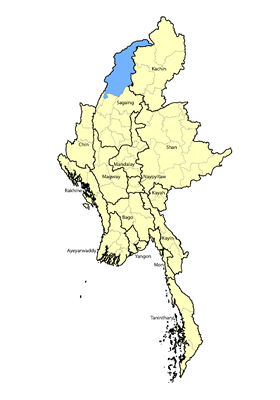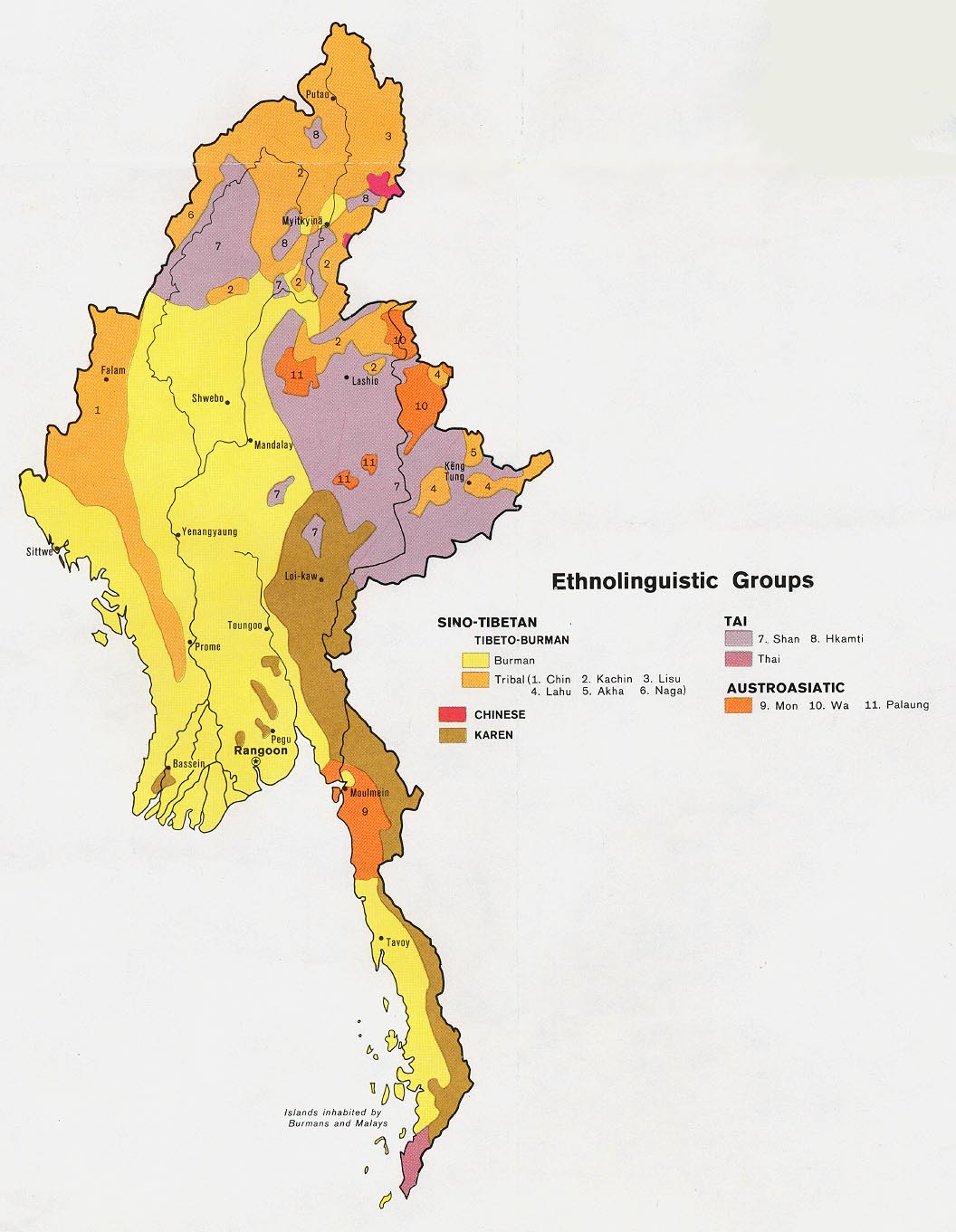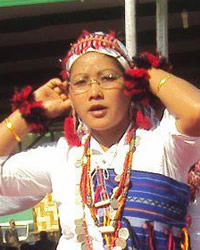

Moshang people live in the Changlang District within the Indian state of Arunachal Pradesh, a mere 200 are found across the border in Myanmar's Sagaing Region, making them one of the least populated ethnic groups in the country. The Moshang homeland "has a mild tropical climate, semi-evergreen forests and rich wildlife. Both the summer and winter are mild."
Although in Myanmar the Moshang are an unrecognized tribe viewed as one of dozens of groups in larger Tangshang and Naga collectives, in northeast India, where they are known as the "Mossang" or "Hawa," they have been granted status as one of India's Scheduled Tribes. This recognition has lifted them out of anonymity and given them a sense of pride, while granting certain privileges afforded to officially recognized groups in that country.
Moshang, which is one of hundreds of languages in the Tibeto-Burman family, shares a high, 90-percent lexical similarity with Shecyu and is part of a cluster of Tangshang-related dialects that includes Cyamcyang, Cyolim, Dunghi, Lochang, Lungri, Maitai, and Mungre.
Although the Moshang population in India today is approximately 20 times larger than in Myanmar, it is agreed that all Moshang people originated in Myanmar before crossing the Patkai mountains at various times. The Moshang in India are generally highly educated, and the tribe has established links with other Indian communities through "Moshang entrepreneurs, white-collar workers, teachers, doctors, businessmen, and politicians."
The Moshang enjoy eating beef, pork, and fish, while sweet potatoes, arum, colocasia, jungle roots, cucumbers, and pumpkins also form part of their diet. Fruit that grows in the area includes oranges, mangoes, pineapples, and bananas. The Moshang traditionally observed strict marriage customs, including one which "dictated that a young man had to take a bride from his mother's clan. If not, he would be fined a buffalo. Should no girls of that clan be available, the man was permitted to take a wife from another acceptable clan." A council of elders, called phova, exercises social control in Moshang villages and determines punishments and fines. Indiscretions that induce the council's wrath include "premarital sexual relations, adultery, elopement, land disputes, theft, quarrels, and disrespect for rules and customs."
Having practiced spirit appeasement for centuries, many superstitions became embedded in Moshang culture. One of them required that "in the fourth month of a pregnancy the husband performed a ritual in the jungle. A pig was sacrificed, and its blood sprinkled on a post erected on the left side of the entrance to the house. The head of the pig was hung over the bed of the pregnant woman." Before their conversion to Christianity, the Moshang observed two celebrations relating to the harvest season, at which pigs and chickens were sacrificed to the spirits. Those rituals have all but died out, and today the Christians celebrate their harvests by giving thanks to God for his bountiful provision.
Almost all Moshang people in Myanmar are Christians belonging to the Church of Christ denomination, while the 2011 Indian census found that 93 percent of tribe members residing in India were Christians, with a few Hindus and animists among them. The Moshang started turning to Christianity in the 1970s, but church splits and disunity have affected their spiritual growth.7 The Moshang New Testament, using the Hawa dialect, was published in 20008 and the complete Bible in 2014, making it one of only a few Bible translations in use among more than 50 Tangshang-related tribes in Myanmar. Moshang believers on both sides of the border have been well served by it.
Pray for Moshang hearts to be open and for whole families to experience peace and hope in Christ.
Pray for revival fire to spread uncontrollably from family to family.
Pray for Moshang Christians to excel in love, joy, and peace as they take Christ to others.
Pray for their leaders to listen to the Lord, hear him, and obey him.
Ask God to strengthen those who are sharing the gospel so they can do it with love and wisdom.
Scripture Prayers for the Moshang in Myanmar (Burma).
Asia Harvest, Copyrighted 2026 © Used with permission
| Profile Source: Joshua Project |
| Other PDF Profile |