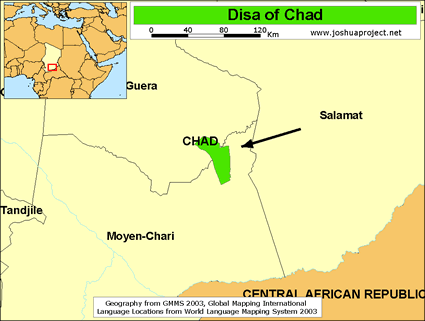
The Disa people speak a language from the Nilo-Saharan family, which connects them to other ethnic groups in the Sahel region. Their history is rooted in the savanna and semi-arid zones of Chad, where they have lived for generations as part of small, rural communities. Traditionally, they have relied on farming and herding for survival, and their cultural identity has been shaped by both environmental challenges and interactions with neighboring peoples.
The Disa people live primarily in rural areas where agriculture and livestock herding dominate daily life. Millet, sorghum, and peanuts are common crops, while goats and cattle provide milk and meat. Life is physically demanding, and resources such as clean water and healthcare are often scarce.
Family ties are strong, and extended families often live together or nearby. Social life revolves around communal work, seasonal festivals, and oral traditions. Hospitality is highly valued, and meals are shared generously when possible.
Food typically consists of porridge made from millet or sorghum, accompanied by vegetables and occasionally meat. Tea is a common drink, and meals are simple but nourishing. Celebrations include Islamic holidays and local cultural events, often marked by music, dance, and storytelling.
The Disa people are primarily Muslim, following Sunni traditions. Islamic practices such as daily prayers, fasting during Ramadan, and observance of religious festivals are central to their lives. While Islam shapes their worldview, elements of traditional beliefs and folk practices may persist in some communities.
The Disa people face significant physical and spiritual challenges. Many live in poverty, with limited access to education, healthcare, and clean water. Economic opportunities are scarce, and droughts often threaten food security. Spiritually, most have little exposure to the gospel, and Christian presence among them is almost non-existent. There is a need for workers who can share the message of Jesus Christ in culturally sensitive ways and for resources that address both practical needs and eternal hope.
Pray for the Disa people to encounter Jesus Christ through personal relationships, media, and Scripture in their heart language.
May the Lord reveal himself to Disa family leaders through dreams and visions.
Ask God to raise up workers who will serve among them with love, humility, and cultural understanding.
Pray for improved access to education, healthcare, and sustainable livelihoods for Disa families.
Intercede for hearts to be open to the transforming power of the gospel, bringing hope and peace to their communities and families.
Scripture Prayers for the Disa in Chad.
Culture of Chad
Islam in Chad
| Profile Source: Joshua Project |