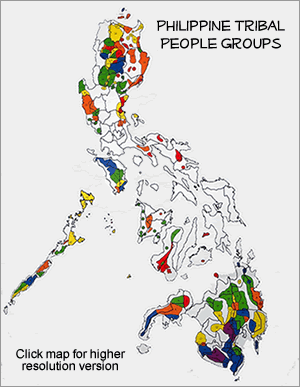
The Malaweg — also known as the Malaueg or Malawag — are an indigenous people of northern Luzon, concentrated in the municipality of Rizal in south-central Cagayan Province and extending westward into Conner municipality in Apayao Province. Rizal bears the proud local title "The Premier Town of the Malaweg," and the vast majority of its residents are Malaweg speakers. The community also extends into the foothill regions along the Matalag River near the southeastern border of the Cordillera highlands.
Their name carries a story. When Spanish colonizers arrived in Cagayan Valley shortly after the fall of Manila in 1571, a thirsty friar was given water by a local resident. When the friar asked its source, the man said "ueg" — meaning fresh water or a brook. The friar, suffering a subsequent stomachache, reportedly said "malo" — Spanish for bad — and the two words fused over time into malo-ueg, which became Malaueg, and eventually Malaweg.
The Malaweg speak a distinct dialect of Itawit (Itawis), an Austronesian language of the Northern Luzon branch closely related to Ibanag and Ilocano. Many Malaweg also speak Ibanag and Ilocano as secondary languages. The New Testament was completed in Itawit in 2009, with Scripture portions available as early as 1978, and the JESUS Film has been produced in the language. Audio Bible recordings and other gospel resources are also available.
The Malaweg share deep cultural roots with neighboring Itawit and Ibanag peoples of the Cagayan Valley, while retaining their own distinct dialect and traditions. Their history includes firm resistance to Spanish colonial rule. In 1718, Malaweg and Itawit leaders Matatangan and Sinanguinga led a major revolt that swept through the whole of Cagayan Province, drawing in the Kalinga and Irraya peoples before Spanish troops crushed it. The colonial tobacco monopoly of 1781 brought generations of economic hardship, forcing the Malaweg to cultivate tobacco under compulsion for nearly a century. This legacy of resilience marks the Malaweg identity to this day.
The Malaweg are rice farmers, and the agricultural cycle shapes the rhythm of family and community life. The practice of illu — communal mutual aid — remains the social glue of their farming communities. Neighbors help one another through planting and harvest in rotation, so that each family receives the labor of the whole community in its turn and gives it back in kind. Beyond rice, the Malaweg cultivate corn, root crops, vegetables, and tobacco, and fishing in local rivers supplements the family table.
Marriage is traditionally a matter arranged between families through careful negotiation. The process begins with the mangagon — literally "going up" — in which the young man's family sends a skilled elder known as the manakem, a trusted go-between, to open discussions with the girl's family. The tadug, or dowry, is negotiated between the two families, often before the young couple has had much opportunity to know each other. These customs have softened with the influence of modern education and mobility, but family approval remains central to any marriage decision.
The Malaweg are proud custodians of the epic poem Biuag and Malana, a celebrated oral narrative of heroism and valor that originated in Rizal and forms an important piece of Cagayan Valley cultural heritage. Fiestas marking patron saint days and civic celebrations bring communities together for music, food, and traditional observance. The practical wisdom of the Malaweg is also expressed in their proverbs and oral traditions, which encode values of loyalty, humility, and communal dedication — virtues the people of Rizal name as central to their identity.
Christianity is the primary religion of the Malaweg, a faith rooted in the centuries of Catholic missionary activity that followed the Spanish colonial arrival in Cagayan Valley. The Catholic tradition is woven deeply into the social calendar through patron saint festivals, feast days, and sacramental rites that mark birth, marriage, and death.
A meaningful evangelical presence also exists among the Malaweg, representing believers who have come to a personal, scripture-grounded faith in Jesus Christ through the New Testament and other gospel resources available in their language. A portion of the community continues to hold traditional beliefs alongside their Christian identity, including reverence for banig — spirit beings believed to inhabit certain places and capable of causing illness when disturbed. The Malaweg folk healer, known as the surjano, offers ritual mediation through prayers and offerings called massangnga to appease offended spirits, a practice that persists in tension with the Christian faith many hold.
Geographic remoteness in the river valleys and foothills of northern Cagayan and Apayao limits access to quality healthcare, secondary education, and economic opportunity for many Malaweg families. The Malaweg language faces quiet pressure from Ilocano and Filipino, and intentional investment in mother-tongue literacy and cultural preservation would help a generation stay connected to their heritage. A complete Bible in the Malaweg language does not yet exist, and deepening the community's engagement with the Itawit New Testament and audio resources could strengthen the foundation of faith already present among them.
Spiritually, the greatest need is for the evangelical community among the Malaweg to move from passive belief into active, reproducing discipleship. The gospel tools are present — Scripture, audio recordings, the JESUS Film — but tools require hands willing to use them. Mature believers willing to invest in the spiritual formation of their neighbors, and local church communities committed to discipling across generations, are what will determine whether the Malaweg church grows in depth and reach.
Pray that Malaweg evangelical believers will embrace their calling as ambassadors of Christ and become a sending community that carries the gospel to the unreached peoples of the Cagayan Valley and the wider Philippines.
Pray for the Holy Spirit to break the hold of syncretism, so that those who carry the name of Christ will also walk fully free of fear-based spirit veneration.
Pray for local Malaweg pastors and church leaders to be equipped with solid biblical training and a vision for cross-cultural mission beyond their own community.
Pray that the Itawit New Testament, audio Scriptures, and the JESUS Film will reach every Malaweg household, and that families will encounter the living God in the language of their hearts.
Scripture Prayers for the Malaweg in Philippines.
https://en.wikipedia.org/wiki/Malaweg_language
https://ncca.gov.ph/about-culture-and-arts/culture-profile/glimpses-peoples-of-the-philippines/malaweg/
https://www.yodisphere.com/2022/09/Itawit-Culture.html
https://www.ethnologue.com/language/itv/
https://globalrecordings.net/en/language/10997
https://www.jesusfilm.org/watch/jesus.html/itawis.html
https://live.bible.is/bible/ITVSTP
https://www.peoplegroups.org/Explore/groupdetails.aspx-peid=46615
| Profile Source: Joshua Project |