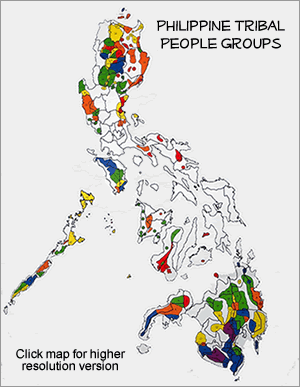
The Southwestern Bontoc are an indigenous Igorot people of Mountain Province in the Cordillera Administrative Region of northern Luzon, the Philippines. Their home communities — including the barangays of Alab, Balili, and Gonogon — lie in the southwestern portion of Bontoc Municipality, nestled among the rugged peaks and river valleys of the Cordillera Central mountain range. The Chico River, which winds through this highland terrain, has long been a defining geographic feature of Bontoc life.
The Southwestern Bontoc speak Southwestern Bontok, a variety of the Bontoc macrolanguage classified as moribund, meaning it is spoken primarily by older generations and is at serious risk of extinction as younger community members shift to Central Bontoc, Ilocano, Filipino, and English. Bontoc belongs to the Northern Luzon branch of the Malayo-Polynesian language family. Scripture is available to the Southwestern Bontoc in related Bontoc varieties and in Filipino, languages they understand.
The Bontoc people successfully resisted Spanish colonial penetration for centuries, maintaining their highland autonomy long after lowland Philippine peoples came under Spanish influence. American administration beginning in the early twentieth century brought roads, schools, and Protestant missionary activity that transformed Mountain Province significantly. Mountain Province is today the only predominantly Protestant province in the Philippines. Wikipedia The Southwestern Bontoc share in this broader Christian heritage while carrying a distinct linguistic identity tied to their specific corner of the highlands.
Life in Southwestern Bontoc communities is anchored in highland agriculture. The Bontoc cultivate wet rice on stone-walled terraces supplemented by organic fertilizers, alongside crops like sweet potatoes, corn, millet, and beans, using irrigation systems of canals and wooden troughs. Fishing in the Chico River and gathering forest products supplement the family diet. The terraced rice fields of Mountain Province are not only a food source, but a living expression of indigenous engineering and land stewardship passed down across generations.
Extended family networks shape social life, and community decisions are made with significant weight given to elders and recognized community leaders. Clan identity and kinship obligation remain important even as younger generations move into urban areas for education and employment. The municipality of Bontoc serves as the commercial and administrative center for the region, drawing highland communities into broader economic and social life.
The municipality of Bontoc celebrates the annual Lang-ay Festival, a vibrant gathering of Cordillera indigenous peoples that showcases traditional music, dance, weaving, and cultural exchange. Music is important to Bontoc life and is usually played during ceremonies, with songs and chants accompanied by nose flutes, gongs, bamboo mouth organs, and Jew's harps. Church gatherings and Christian celebrations mark the weekly and annual rhythms of community life alongside these cultural traditions.
Christianity — primarily in Protestant form — is the predominant faith of the Southwestern Bontoc, consistent with the broader character of Mountain Province. Protestant denominations including Episcopal, United Church of Christ in the Philippines, and various evangelical groups have a presence across the region, and church attendance is a meaningful part of community identity for many families.
The Bontoc people, despite mostly having Christian beliefs, still emphasize the importance and role of spirits in their daily lives. They believe in ancestral spirits called anitos, who are honored through various rituals and offerings, practices deeply intertwined with their agricultural calendar and community events. This blending of Christian identity with traditional spiritual practice presents both a pastoral challenge and an opportunity — the call to ground faith fully in the truth of Jesus Christ, whose resurrection declares his authority over every spiritual power and whose grace offers what no ancestral ritual can provide.
The Southwestern Bontoc face a pressing cultural and linguistic need: their dialect is critically endangered and may be lost within a generation if intentional preservation efforts are not sustained. The erosion of the language represents not merely a cultural loss but the disappearance of a unique way of understanding and articulating the world. Access to healthcare, economic opportunity beyond subsistence agriculture, and quality higher education remain ongoing challenges for highland communities throughout Mountain Province.
Spiritually, the deepest need is for a faith that is genuinely rooted in the living Word of God rather than in inherited practice or a blending of Christian confession with fear-based traditional spirituality. Southwestern Bontoc believers who have experienced the transforming grace of Jesus Christ carry a calling that extends beyond their mountain communities. The Philippines is home to millions of unreached and nominally religious people, and Christians from the Cordillera highlands have both the faith and the cultural resilience to serve as part of the global missionary movement.
Pray that Southwestern Bontoc Christians will grow in deep, Scripture-rooted faith, finding in Jesus Christ the peace and freedom that no ancestral ritual can give.
Pray that Southwestern Bontoc believers will hear and respond to the call to take the gospel to unreached peoples across the Philippines and beyond.
Pray for the preservation of the Southwestern Bontok language and for discipleship resources that can serve the community in their heart tongue.
Pray for economic opportunity, healthcare access, and educational advancement for Southwestern Bontoc families living in the Cordillera highlands.
Pray that the annual Lang-ay Festival and other community gatherings will become opportunities for the gospel to be heard and for Cordillera believers to encourage one another in their faith.
Scripture Prayers for the Bontoc, Southwestern in Philippines.
https://en.wikipedia.org/wiki/Southwestern_Bontoc
https://en.wikipedia.org/wiki/Bontoc_people
https://en.wikipedia.org/wiki/Bontoc,_Mountain_Province
https://en.wikipedia.org/wiki/Mountain_Province
https://en.wikipedia.org/wiki/Bontoc_language
https://www.omniglot.com/writing/bontoc.htm
https://www.yodisphere.com/2022/07/Bontok-Tribe-Culture-Bontoc-People.html
https://www.bahayugnayan.org/community-groups/bontoc
https://grokipedia.com/page/Bontoc_people
https://grokipedia.com/page/Bontoc_language
| Profile Source: Joshua Project |