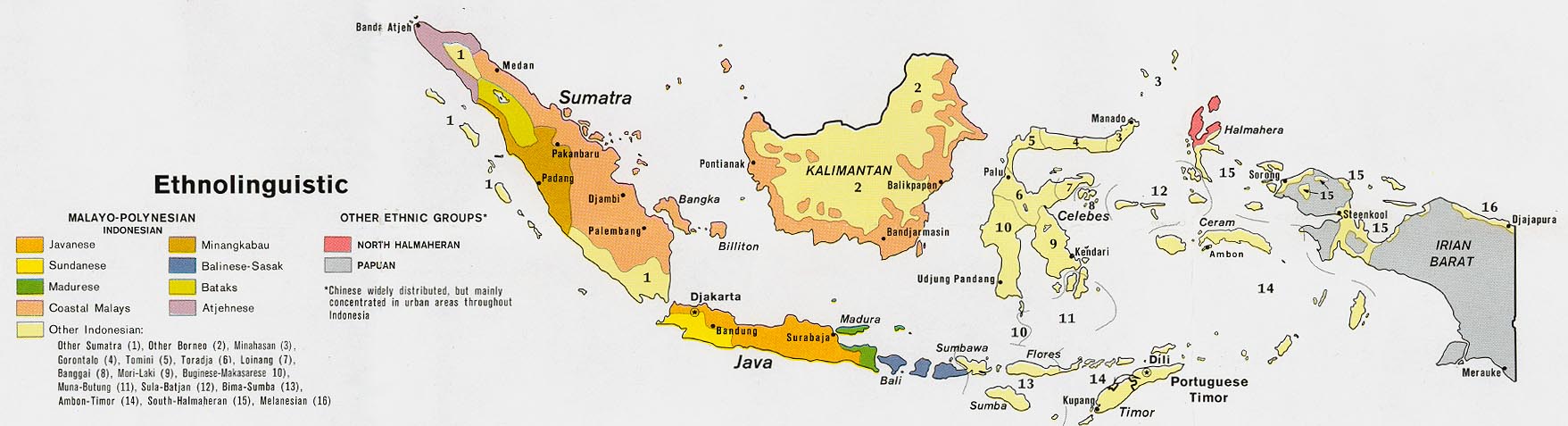

The Mualang are an indigenous Dayak people of western Borneo in Indonesia, centered in West Kalimantan, especially in parts of Sekadau and Sintang Regencies. They are commonly identified as part of the broader Ibanic Dayak world, though they retain a distinct ethnic identity of their own. Their language is Mualang, an Ibanic Dayak language spoken in the interior of West Kalimantan. Scholarly linguistic work specifically describes Mualang as a language of western Kalimantan's inland communities, which fits the picture of a people shaped by river systems, forested land, and long-standing village life rather than coastal urban centers.
Public historical material focused narrowly on the Mualang is not abundant, but available sources point to a community with well-maintained socio-cultural traditions and a continuing effort to preserve both language and identity. That is typical of many Dayak groups whose local histories are carried more through community memory, adat, and village continuity than through widely published national narratives.
The Mualang are primarily associated with inland rural communities, and their daily life is best understood in the context of West Kalimantan's interior. Village life is likely shaped by strong kinship ties, customary leadership, and close dependence on rivers, forest land, and small-scale agriculture. Public sources specifically place them in the Belitang and Sepauk areas, which are inland rather than major urban zones.
Their livelihood is commonly described in broader scholarship as part of the Dayak pattern of farming, forest use, and local exchange. A major academic reference on Mualang society even centers on "material provisioning" in hinterland West Kalimantan, which strongly supports the idea that subsistence and household economy remain important to understanding them. Meals in communities like this commonly draw from rice, cassava, vegetables, forest products, river fish, and locally grown foods, though highly specific menu details for the Mualang themselves are not widely documented in accessible sources.
Family and community life appear to be strongly communal. Research on the traditional Panyai house among the Dayak Mualang describes it not simply as a dwelling but as a center of social structure and shared life, emphasizing cooperation, solidarity, and togetherness. Cultural expression also remains visible in traditional songs, dances, and weaving traditions. These details suggest a people whose recreation and celebration are often communal, rooted in shared identity rather than individual entertainment.
The Mualang are mostly identified as Christian, but traditional spiritual beliefs still remain present. That means there is a real Christian witness among them, yet some may still blend Christian identity with older spirit-centered practices or inherited religious assumptions. Where that happens, the issue is not merely cultural continuity but divided trust. If Christ is named while fear of spirits, ritual protection, or reliance on unseen powers still governs daily life, then biblical faith has not yet fully taken root.
Because there is already a substantial Christian presence, they should not be treated as a people with no gospel exposure. The deeper issue is maturity, doctrinal clarity, and wholehearted faith in Christ rather than superficial identification. Scripture resources are reported as available in their language.
The Mualang need spiritually strong churches, faithful local leaders, and believers who live with clear biblical conviction rather than nominal or blended Christianity. Since there is already a Christian base, the greatest need is not merely outside contact but deeper discipleship, stronger teaching, and churches that help families walk in repentance, holiness, and confidence in Christ alone.
They likely also face practical pressures common to interior communities in West Kalimantan. Access to medical care, stronger education, dependable transport, and economic stability can all be harder in inland areas than in major cities. Where distance and geography isolate villages, even ordinary needs can become heavier burdens. Practical help matters, but it should strengthen—not replace—the need for healthy, enduring Christian witness.
Pray that Mualang believers would grow in deep biblical faith and reject every lingering fear of spirits or blended belief.
Pray that the Lord would raise up faithful pastors, teachers, and strong Christian families among them.
Pray for better access to medical care, education, and stable livelihoods in their inland communities.
Pray that Mualang Christians would become a gospel force to other people groups in Indonesia who still lack a clear witness to Christ.
Scripture Prayers for the Mualang in Indonesia.
https://www.ethnologue.com/language/mtd/
https://www.universiteitleiden.nl/en/research/research-output/humanities/a-grammar-of-mualang-an-ibanic-language-of-western-kalimantan-indonesia
https://www.lotpublications.nl/Documents/153_fulltext.pdf
https://en.wikipedia.org/wiki/Dayak_Mualang
https://jurnal.untan.ac.id/index.php/BALELE/article/view/70361/0
| Profile Source: Joshua Project |