




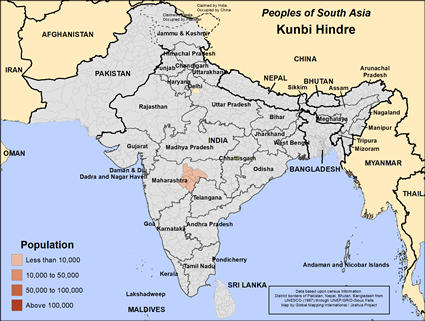
The Hindre Kunbi are a community in India connected to the broader Kunbi agricultural tradition found primarily in Maharashtra and nearby western Indian regions. The Kunbi communities have historically been associated with farming, village cultivation, and rural land stewardship. Over centuries, different Kunbi subgroups developed distinct regional identities shaped by geography, local customs, clan structures, and social organization. The Hindre Kunbi appear to be one such subgroup within this wider agricultural and Marathi-speaking cultural framework.
Historically, Kunbi communities played an important role in the rural economy through crop cultivation, cattle care, and village labor systems. Their identity was preserved through hereditary farming traditions, extended family networks, and strong ties to local village life. As India modernized, many Kunbi families began participating in education, urban employment, and business while still maintaining close attachment to ancestral villages and agricultural heritage.
The daily lives of the Hindre Kunbi are likely centered around family, agriculture, work responsibilities, and community relationships. In many rural Maharashtrian communities, extended families continue to provide emotional and financial support across generations. Respect for elders, preserving family honor, and maintaining social ties are often important values.
Agriculture has traditionally been central to Kunbi livelihoods. Depending on their location, Hindre Kunbi families may cultivate crops such as rice, millet, wheat, sugarcane, pulses, or vegetables. Others may work in transportation, labor, local trade, government service, or modern professional occupations as economic opportunities expand beyond agriculture.
Meals commonly reflect Maharashtrian cuisine and may include rice, lentils, millet breads, vegetables, yogurt, curries, and locally prepared dishes. Festivals, weddings, harvest celebrations, and religious ceremonies often serve as major social events that reinforce family bonds and cultural identity.
Like many communities in India, the Hindre Kunbi are increasingly affected by urbanization, changing agricultural economics, education, migration, and modern technology. Younger generations may balance traditional expectations with modern educational and career opportunities.
The Hindre Kunbi are associated primarily with Hindu religious traditions. Hindu religious life commonly includes devotion to gods and goddesses, temple worship, sacred festivals, ritual observances, and household ceremonies connected to family life and important life events.
Among Maharashtrian communities, devotion to regional deities and participation in village festivals can hold significant cultural importance. In some families, folk beliefs, astrology, ancestral customs, local spirit traditions, and ritual purity practices may also influence daily spiritual life.
Religious identity is often closely tied to family heritage and community belonging. Although many Hindre Kunbi may sincerely practice inherited religious traditions, they still need the gospel of Jesus Christ and the assurance of salvation that comes through faith in Him rather than through ritual observance, cultural identity, or religious duty.
The Hindre Kunbi need greater access to biblical teaching, Scripture, discipleship, and faithful Christian witness presented with humility, compassion, and cultural understanding. Many rural and semi-rural communities in India continue to have limited meaningful exposure to evangelical Christianity and clear biblical teaching.
Practical needs may include stable agricultural income, educational opportunities, healthcare access, support for farming families, and guidance for younger generations facing economic uncertainty and migration pressures. Rural communities can also struggle with debt, changing weather conditions, and limited employment opportunities outside agriculture.
There is a need for mature believers who will patiently build relationships, demonstrate Christ's love through practical service, and establish strong local fellowships rooted firmly in biblical truth.
Pray that the Hindre Kunbi people would hear the gospel clearly and come to know Jesus Christ as Savior and Lord.
Pray that God would raise up faithful and compassionate Christian workers who will serve among the Hindre Kunbi with wisdom, love, and perseverance.
Pray that the Hindre Kunbi would be adopted through the People Group Adoption program so that sustained prayer, discipleship, and long-term gospel outreach would continue among them.
Pray for strengthened families, stable livelihoods, educational opportunity, and spiritual openness within the Hindre Kunbi community.
Scripture Prayers for the Kunbi Hindre in India.
https://en.wikipedia.org/wiki/Kunbi
https://www.britannica.com/topic/Hinduism
https://www.britannica.com/place/Maharashtra-state-India
https://en.wikipedia.org/wiki/Marathi_people
| Profile Source: Joshua Project |



