


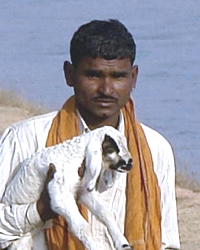

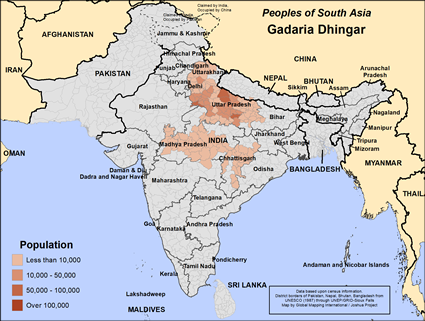
Gadaria means shepherd, a traditional occupation of the Gadaria of north India for hundreds of years. A sub-group of the larger Gadarias is the Dhingar Gadaria.
Today, most still follow sheep-related professions. Women also weave woolen blankets to sell. Many own small or medium-sized plots of land where they grow vegetables and fruit. Many children quit school early to help their parents. Some Dhingar have left their traditional occupation and have become construction and factory workers. Those who have education work for the government and teach for a living. They marry within their group but not within the same village.
Among the Hindu Dhingar Gadaria community of India, their beliefs and practices are not entirely separate from broader Hindu traditions, but they do include distinctive features shaped by their traditional identity as shepherds and pastoralists.
One notable aspect of their religious life is the strong connection between their beliefs and their livelihood. As a community historically associated with herding sheep and goats, many of their practices reflect a concern for the protection, health, and multiplication of their flocks. Spiritual activities may include prayers, offerings, or rituals aimed at ensuring the well-being of their animals, which are central to their economic survival and social identity.
The Dhingar Gadaria often show special devotion to deities and local gods associated with protection, strength, and provision. In addition to worshiping widely recognized Hindu gods such as Krishna or Shiva, they may devote attention to regional or clan deities believed to guard their families and livestock. This combination of mainstream Hindu worship and localized devotion gives their religious life a practical and immediate focus.
Another distinctive feature is the presence of folk religious elements alongside orthodox Hindu practices. These may include belief in spirits, the use of charms or protective rituals, and the involvement of local religious specialists who address issues such as illness, misfortune, or spiritual disturbance. These practices are often integrated into daily life rather than set apart as formal religious observance.
Their festivals and religious gatherings also reflect their pastoral background. Celebrations may be adapted to their seasonal movements or agricultural cycles, and music, storytelling, and communal participation play an important role in expressing their faith. These events strengthen both religious devotion and community identity.
The Dhingar are a mostly oral culture so the gospel must be presented to them in audio and visual form.
Ask the Lord to send workers to the Dhingar Gadaria.
Pray that parents can adequately provide for their children.
Pray for families and communities to discover and embrace the gift of life found by trusting Christ and his finished work.
Ask the Lord to raise up a movement to Christ among the Dhingar Gadaria.
Pray they will listen to gospel radio and television with their hearts as well as their ears.
References
Scripture Prayers for the Gadaria Dhingar in India.
| Profile Source: Joshua Project |





