


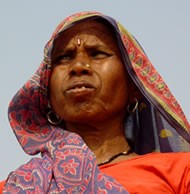

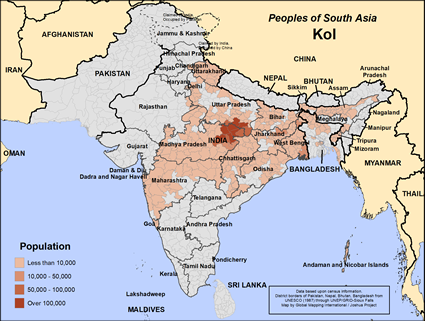
The Kol are an indigenous tribal community found mainly in central and eastern India, especially in Uttar Pradesh, Madhya Pradesh, Chhattisgarh, Jharkhand, and neighboring regions. Historically, the term "Kol" was sometimes used broadly for several tribal peoples of the Chotanagpur region, though today it also refers to a distinct tribal and caste community with its own identity. Most Kol people speak regional dialects such as Bagheli, Hindi, or local tribal languages depending on location. Many are recognized within India's Scheduled Caste or Scheduled Tribe systems because of longstanding social and economic marginalization.
Historically, many Kol communities depended on forests, agriculture, gathering fuel wood, hunting, and daily wage labor for survival. Colonial land systems and outside control over forests deeply affected tribal communities, contributing to poverty and displacement. The Kol are also remembered for resistance movements during the British colonial period, including the Kol uprising in the nineteenth century against exploitation and land oppression.
Despite outside pressures and gradual assimilation into surrounding Hindu culture, the Kol have preserved many tribal customs, social traditions, and religious practices. Village life, kinship ties, clan identity, and traditional leadership structures remain important in many communities today.
Many Kol families live in rural villages where agriculture, farm labor, forest-related work, and manual labor form the basis of daily life. Some continue collecting forest products such as wood, leaves, herbs, or bamboo materials for sale or household use. Others work in construction, mining, transportation, or seasonal labor in nearby towns and cities. Economic hardship remains common, especially among landless families and those living in remote tribal areas.
Kol villages are often tightly connected communities where extended family relationships play a central role. Homes in poorer areas may be constructed from mud, straw, wood, and locally available materials. Community festivals, dances, music, and oral traditions remain important parts of cultural identity. Traditional musical instruments, tattooing customs, and seasonal celebrations continue in some regions, especially in Madhya Pradesh and Jharkhand.
Meals commonly include millet, rice, lentils, vegetables, and locally available foods. Educational access has improved in some areas, but literacy and long-term educational attainment remain limited in many villages. Younger generations increasingly migrate to cities seeking employment, though this can create tension between modern economic pressures and traditional tribal identity.
The Kol practice a mixture of Hinduism, tribal religion, and animistic beliefs. Many worship village deities, family gods, regional spirits, and ancestral powers believed to influence health, harvests, protection, and daily life. Common deities mentioned among Kol communities include local gods such as Birmidevi, Simoridevi, Babadeo Baba, and other regional spirit beings.
Fear of evil spirits, curses, sickness-causing powers, and supernatural forces remains influential in many communities. Ritual specialists, priests, and shamans may conduct ceremonies intended to bring healing, blessing, fertility, or protection. In some Kol traditions, Singbonga, associated with the sun and creator power, is honored as a supreme deity.
Although many Kol communities have adopted aspects of mainstream Hindu worship, older tribal beliefs and animistic practices remain deeply rooted. Spiritual life is often shaped more by fear, ritual obligation, and community tradition than by personal assurance or biblical truth. While there are some followers of Christ among the Kol, many still have little understanding of the gospel message and salvation through Jesus Christ alone.
The Kol continue to face challenges related to poverty, limited educational opportunity, land insecurity, poor healthcare access, and unstable employment. Remote villages may struggle with weak infrastructure, inadequate sanitation, and limited access to consistent medical care. Economic hardship often pushes younger generations toward difficult labor conditions or migration to crowded urban areas.
Spiritually, the Kol need faithful gospel witness in their own languages and cultural settings. Because many communities are oral in nature, audio Scripture resources, oral Bible storytelling, discipleship, and relationship-based ministry are especially important. There is a need for mature local believers, strong biblical churches, and long-term ministry workers who can patiently share the gospel among Kol villages and tribal networks. Existing Christians among the Kol and nearby tribal peoples also need encouragement and training so they can effectively reach neighboring communities with biblical truth.
Pray that the Kol people will hear a clear presentation of the gospel in their own languages and place their faith in Jesus Christ.
Pray that God will strengthen existing believers among the Kol so they can boldly share biblical truth and disciple others in their communities.
Pray that Kol families facing poverty, land insecurity, poor healthcare, and limited educational opportunities will experience practical help and hope.
Pray that the Kol people will be adopted through the People Group Adoption program so that ongoing prayer, evangelism, discipleship, and church planting efforts will continue among them.
Scripture Prayers for the Kol in India.
https://en.wikipedia.org/wiki/Kol_people
https://koltribe.in/
https://www.encyclopedia.com/humanities/encyclopedias-almanacs-transcripts-and-maps/kols
https://aadivartmuseum.in/kol-house.html
https://www.trijharkhand.in/en/kol
https://repository.tribal.gov.in/bitstream/123456789/73843/1/SCST_2018_handbook_0063.pdf
https://vajiramandravi.com/upsc-exam/kol-uprising/
| Profile Source: Joshua Project |



