




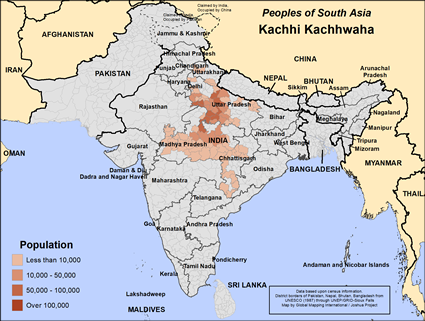
The Kachhwaha Kachhi are a Hindu community found mainly in northern and central India, especially in states such as Uttar Pradesh, Madhya Pradesh, Rajasthan, and surrounding regions. They are associated with the wider Kachhi caste grouping, a community traditionally connected to vegetable cultivation, small-scale farming, and market gardening. The term "Kachhwaha" may reflect historical clan or Rajput-linked associations adopted over time by certain Kachhi groups, though the community today is generally identified through its agricultural livelihood and caste identity rather than political power or royal lineage.
Like many caste-based communities in India, the Kachhwaha Kachhi developed within a highly localized social structure where occupation, marriage patterns, and village identity were closely connected. Oral tradition, family lineage, and regional customs continue to shape their social identity. Over generations, many families remained tied to agricultural labor, local produce markets, and village economies, though urban migration and modernization have gradually changed parts of traditional life.
The Kachhwaha Kachhi primarily speak regional Indo-Aryan languages such as Hindi and related dialects depending on the state where they live. Their identity is strongly connected to local community networks, family honor, and social customs common within rural Hindu society in northern India.
The Kachhwaha Kachhi are traditionally farmers and vegetable growers. Many families cultivate crops such as potatoes, onions, tomatoes, peas, gourds, chilies, wheat, millet, and seasonal vegetables for both household use and local market sales. Their agricultural work often involves intensive labor and careful management of small plots of land. Some families also work as traders, laborers, or small business owners, especially in towns and growing urban areas.
Village life is usually centered around extended family relationships and close community cooperation. Homes may range from traditional mud-brick houses in rural areas to simple concrete structures in towns and cities. Men often handle farming, transportation, and market sales, while women play major roles in planting, harvesting, food preparation, household management, and caring for children. Seasonal festivals, weddings, religious celebrations, and community gatherings remain important parts of social life.
Education and economic mobility have increased among some Kachhwaha Kachhi families in recent decades, particularly among younger generations seeking government jobs, business opportunities, or university education. However, many rural families still face economic instability, debt pressures, limited land ownership, inconsistent water supply, and dependence on unpredictable agricultural conditions.
Like many agricultural communities in India, younger generations increasingly move toward cities for employment while older generations remain tied to village farming traditions. This migration creates tension between preserving traditional social identity and adapting to modern economic realities.
The Kachhwaha Kachhi are primarily Hindus, and Hindu beliefs shape much of their family and community life. Religious practices commonly include temple worship, observance of Hindu festivals, pilgrimages, household rituals, and devotion to regional deities and Hindu gods such as Shiva, Krishna, Durga, Hanuman, or local village deities depending on regional tradition. Religious identity is closely tied to family customs, caste traditions, and social expectations.
Many families also maintain folk religious practices alongside formal Hindu worship. Belief in astrology, ritual purity, ancestral customs, blessings, curses, spirits, and protective rituals may influence decisions involving marriage, illness, finances, farming, and family wellbeing. In rural areas especially, local spiritual traditions can remain deeply connected to daily life.
Very few Kachhwaha Kachhi have had meaningful exposure to biblical Christianity. Christianity is sometimes viewed as foreign, Western, or outside acceptable caste and family identity. Social pressure and fear of community rejection can make openness to the gospel difficult. They need to hear clearly that forgiveness of sins and reconciliation with God come through Jesus Christ alone rather than through rituals, caste identity, karma, or religious tradition.
The Kachhwaha Kachhi remain largely unreached with the gospel, and there are relatively few known believers among them. Their integration into broader Hindu society and strong caste identity create barriers to Christian witness. Faithful Christian workers are needed who are willing to build long-term relationships, communicate biblical truth respectfully, and demonstrate the love of Christ in practical ways.
Practical needs vary widely between urban and rural communities, but many families continue to face agricultural uncertainty, water shortages, debt burdens, limited educational opportunities, and inconsistent healthcare access. Farmers may struggle with changing market prices, weather instability, and rising farming costs. Younger generations often seek economic advancement while navigating strong family expectations and social pressures.
The Kachhwaha Kachhi need Scripture resources, discipleship materials, and gospel teaching communicated in the languages and cultural forms they understand best. Personal relationships, oral communication, family-centered ministry, and compassionate community service may all play important roles in helping them encounter the message of Christ. Any believers among them would need encouragement, biblical training, and fellowship support because of social pressure connected to caste and religious identity.
Pray that the Kachhwaha Kachhi people will hear a clear presentation of the gospel and place their faith in Jesus Christ for salvation.
Pray that God will raise up faithful Christian workers who are willing to serve among the Kachhwaha Kachhi with wisdom, humility, patience, and compassion.
Pray that the Kachhwaha Kachhi people will be adopted through the People Group Adoption program so that churches and believers will commit to sustained prayer and future gospel outreach among them.
Pray that any believers among the Kachhwaha Kachhi will grow strong in biblical truth and boldly share the hope of Christ with their families and communities.
Scripture Prayers for the Kachhi Kachhwaha in India.
https://en.wikipedia.org/wiki/Kachhi
https://en.wikipedia.org/wiki/Kachwaha
https://www.encyclopedia.com/social-sciences/encyclopedias-almanacs-transcripts-and-maps/castes-india
https://www.britannica.com/topic/caste-social-differentiation
https://minorityrights.org/country/india/
| Profile Source: Joshua Project |



