


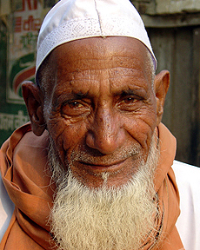

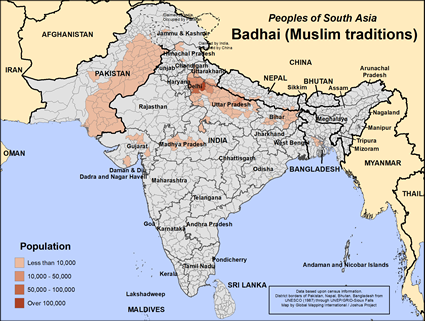
The Badhai (Muslim traditions) are a Muslim artisan community found primarily in northern and central India, especially in states such as Uttar Pradesh, Bihar, Madhya Pradesh, and Rajasthan. The name "Badhai" is traditionally associated with carpentry and woodworking occupations. Historically, the community has been known for producing furniture, agricultural tools, doors, carts, and other wooden goods essential to village life throughout India.
The Badhai are part of the broader occupational communities that developed within the social structure of South Asia over many centuries. Among Muslim Badhai families, Islamic identity became integrated with traditional artisan culture while still retaining local customs shaped by surrounding Hindu and Muslim societies. Their history has largely been preserved through family trade traditions, oral teaching, and apprenticeship rather than formal written records.
As industrial manufacturing and factory-made goods expanded across India, many traditional woodworking communities experienced economic change and declining demand for handmade products. Some Badhai families continue in carpentry, while others have moved into construction, wage labor, transportation, or small business occupations. Despite living in regions with long exposure to Christianity, many Badhai have had little opportunity to hear a clear presentation of the gospel or experience long-term Christian discipleship.
Many Badhai families continue to work with wood in some form, including carpentry, furniture making, home construction, repair work, and craftsmanship. Others work in general labor, transportation, or small trade businesses. Skills are often passed from one generation to the next through informal apprenticeship within the family.
Family and community relationships remain very important among the Badhai. Extended families often live near one another, and elders are respected for preserving trade knowledge and social customs. Marriage arrangements are commonly guided by family networks and community traditions.
Food commonly reflects the cuisine of northern India and may include flatbreads, rice, lentils, vegetables, tea, and regional meat dishes. Religious festivals, weddings, and community gatherings remain important occasions for maintaining social identity and family unity.
Economic conditions vary widely depending on location and access to skilled work. Some Badhai communities face financial instability because of declining traditional trades, inconsistent employment, and limited educational opportunity. Younger generations increasingly seek work in urban areas, leading to gradual social and cultural change within traditional communities.
The Badhai (Muslim traditions) are primarily Sunni Muslims. Islamic practices such as prayer, fasting during Ramadan, mosque attendance, and participation in Islamic festivals shape community life and moral expectations.
Like many Muslim communities in South Asia, some Badhai families also retain elements of folk Islam. Spiritual practices may include shrine visitation, use of charms, consultation with spiritual healers, and beliefs connected to protection from curses or harmful unseen forces. Religious customs are deeply connected to family and community identity.
Very few known believers exist among the Badhai (Muslim traditions). Many have never heard a clear explanation of the gospel centered on repentance, grace, forgiveness, and salvation through Jesus Christ alone. Access to biblical teaching, discipleship, and Christian fellowship remains extremely limited.
The Badhai (Muslim traditions) need greater access to the gospel through culturally understandable evangelism, local-language Scripture resources, and long-term discipleship. Many have little understanding of biblical Christianity or the message of salvation through Christ.
Practical needs are also important in many Badhai communities. Economic instability, limited educational opportunity, inconsistent skilled employment, and poverty affect many artisan families, especially where traditional trades are declining.
The Badhai would benefit from vocational assistance, literacy programs, medical outreach, oral Bible teaching, audio Scripture resources, and compassionate Christian ministry rooted in humility and relationship-building. There is also a need for mature believers willing to live among them and faithfully share the gospel over time.
Pray that the Badhai (Muslim traditions) would hear the gospel clearly and come to trust in Jesus Christ alone for salvation.
Pray that God would raise up faithful Christian workers who are willing to serve among the Badhai with wisdom, humility, and perseverance.
Pray that the Badhai (Muslim traditions) would be adopted through the People Group Adoption program so they receive sustained prayer, ongoing gospel engagement, and future discipleship efforts.
Pray that believers among North Indian Muslim communities would grow bold in sharing the truth of Christ with the Badhai and neighboring peoples.
Scripture Prayers for the Badhai (Muslim traditions) in India.
https://peoplegroups.org/people_groups/pg006856/
https://en.wikipedia.org/wiki/Carpenter
https://en.wikipedia.org/wiki/Muslims_of_Uttar_Pradesh
https://www.indianetzone.com/35/carpenters_india.htm
| Profile Source: Joshua Project |



